Crater Lake, the deepest lake in the United States is a National Park in south-central Oregon. The lake was created naturally more than 7500 years ago by volcanic eruption. Imagine the show it must have put on for the indigenous people who witnessed the event!
The water has remained pure and clear, fed only by rain and snow ever since. Crater Lake is surrounded by mountains and grasslands, the drive up is somewhat innocuous, until you approach the rim, when the stunning beauty smacked me right in the face. With almost vertical walls surrounding the lake, the majesty of the water is viewed from the rim, unless you can scramble down a steep embankment in one area, known as the Cleetwood Cove Trail, where you can reach a beach and during peak season, hop on a boat. As we arrived in early October most of the commercial activity was preparing to close for the winter so no boat rides were in the cards for us. With the road being open we were able to circumnavigate the lake by driving, knowing that the promise of snow was mere weeks away.
When we arrived, the lake looked like any other basic freshwater lake we’d seen: Dark water with a texture of ripples created by a frantic wind that whipped our hair – and the multi-colored falling leaves- around as well. High clouds muted the sky, creating a flat gray background for the stone edifice of the rim as we looked out onto the water. The lake- while beautiful, reflected the muted tones of the sky. If you took one look at it and decided ‘that was that’ you’d miss so much. In this vast, open area, with winds blowing and clouds moving, the view changes moment-by-moment.

The 33-mile Rim Drive, a two-lane road that surrounds the lake, has been built to make purposeful use of the nooks and crannies in the landscape. Every so often, a turnout or parking area provided good reason to get out of the car and have a new viewpoint of the lake, the rim, the sky and surrounding areas. After about the third stop, we realized the clouds were dissipating and the sun had begun to shine. With bright sunlight and blue skies, the next view point dazzled us with a completely different scene as we approached the overlook. The water still rippled from the wind, but the sapphire hue took our breath away. The water looked clearer, cleaner and deeper as it reflected the deep blue sky and the sun shone through.
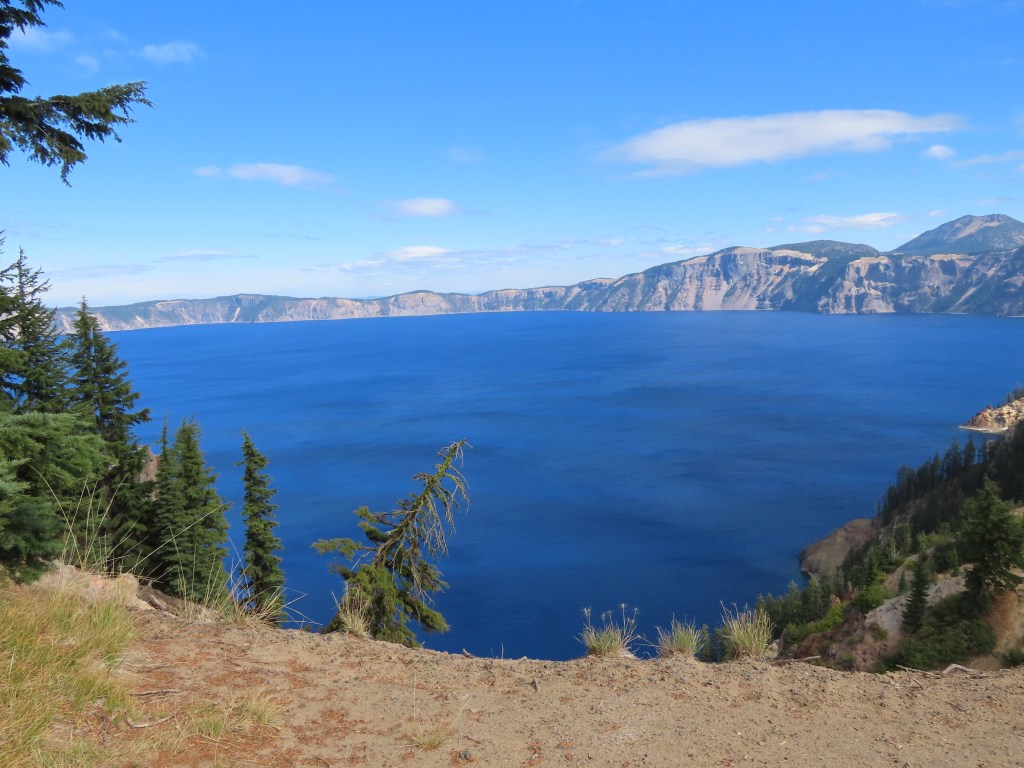
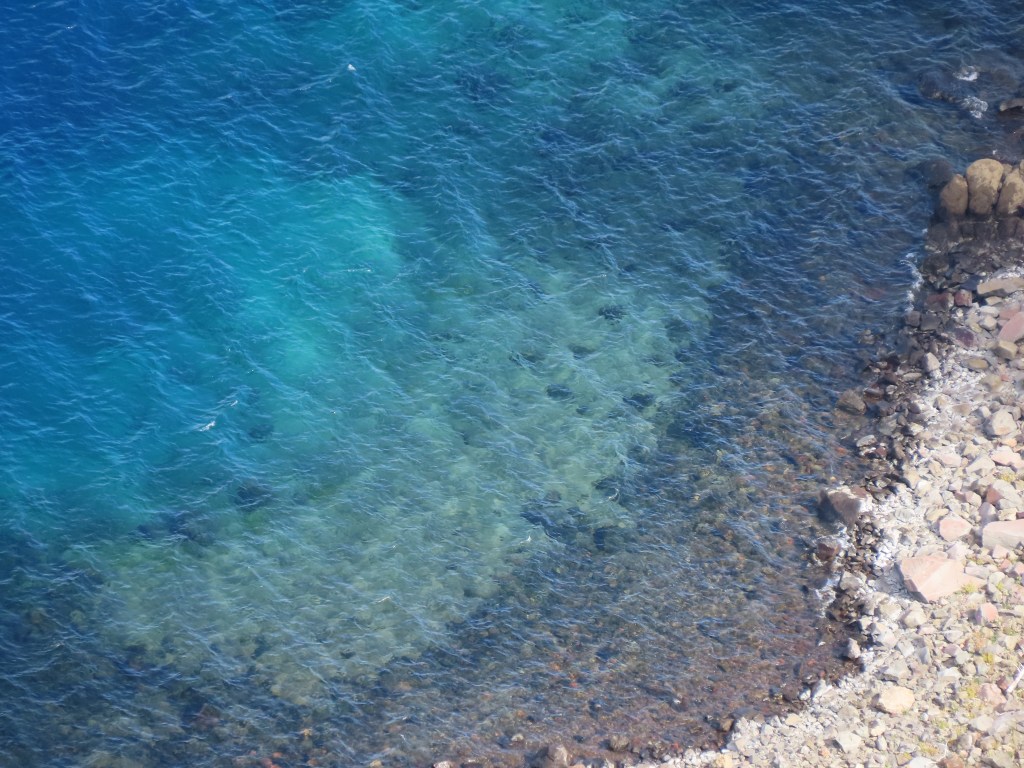
Near the shore on the opposite side of the lake, we could see snow on the beach we hadn’t been able to make out earlier. And on the shore nearest us, there were various shades of blue-green water visible that produced an almost-iridescent look, while still appearing clean. I’d never seen anything like it that wasn’t created by an oil slick!
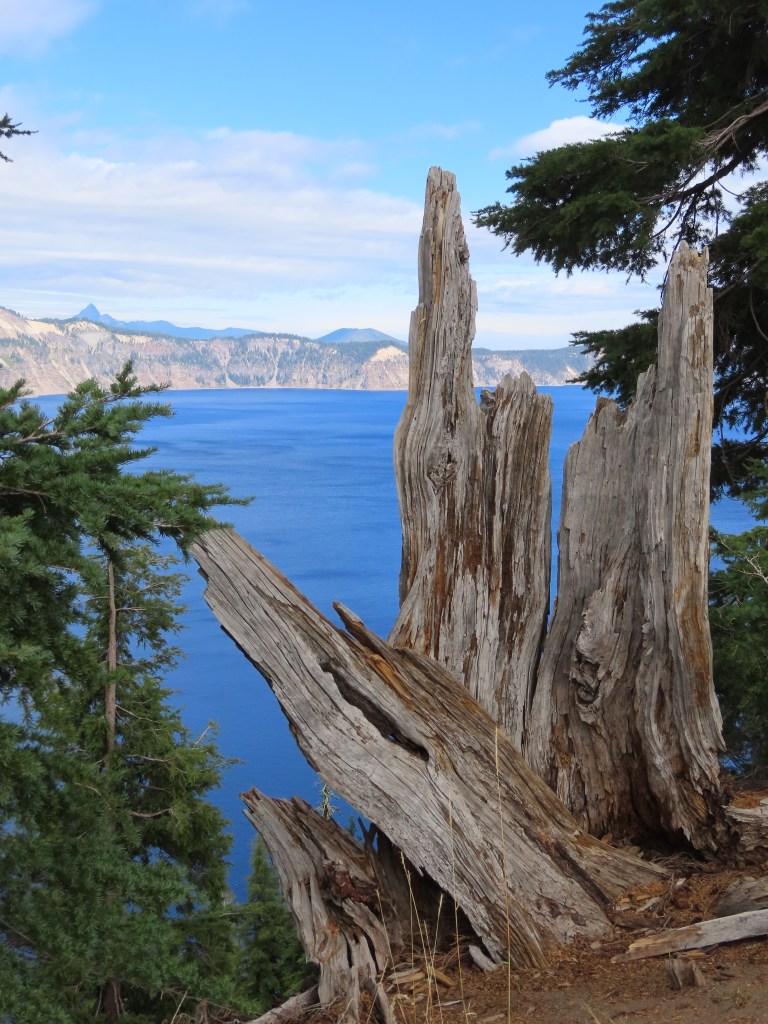
We arrived at the parking lot adjacent to the main commercial area of the park, where a lodge, gift shop, restaurant and coffee shop were all situated – and began walking on an easy path along the rim of the crater. I became fascinated by the number of dead trees along the way. There’s something about the way the trees have been weathered by the sun, the wind and the precipitation and then stay juxtaposed against the background of that deep blue lake water. And that SKY! The thought occurred to me that mother nature was showing off how even in death, a stark beauty can be exposed if you care enough to look at things for a while. Slow down, take your time, enjoy the many beautiful stages of the circle of life.


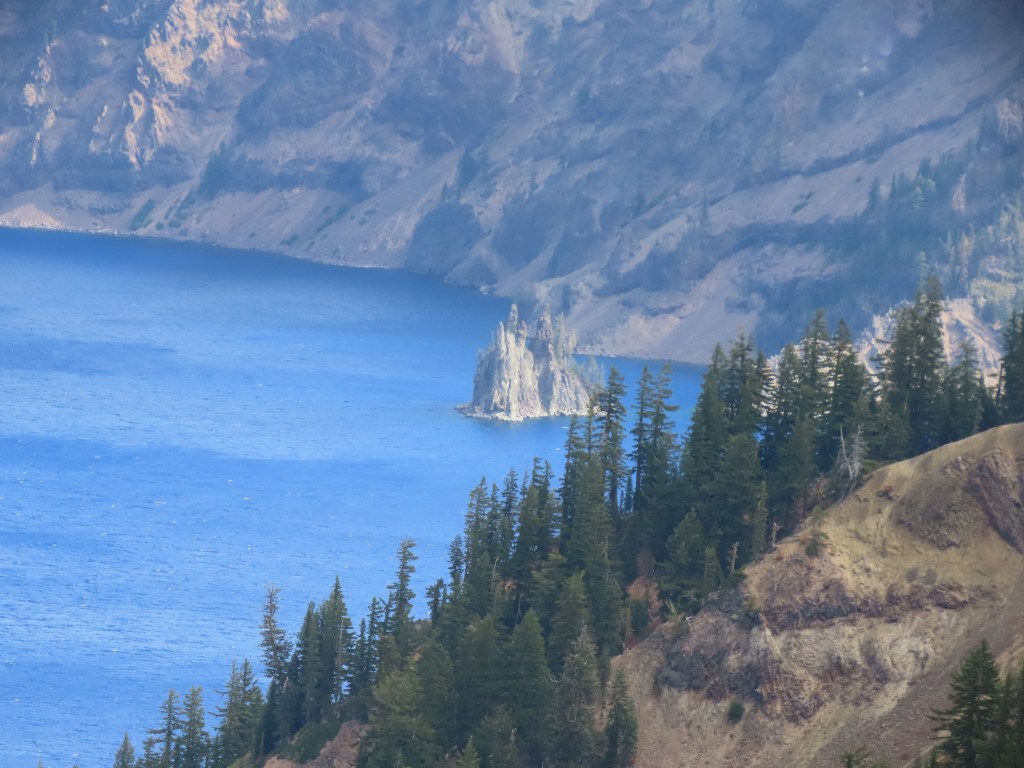
As we walked the light continued to change, bringing more brightness and clarity to the water. Two significant artifacts stand out in the lake, Wizard Island and Phantom Ship. Much like the old adage about icebergs, both are merely the top of a much larger submerged object. Wizard Island is a 763-foot cinder cone created when Crater Lake first filled with water, and Phantom Ship is part of a submerged stratovolcano cone protruding from the water.
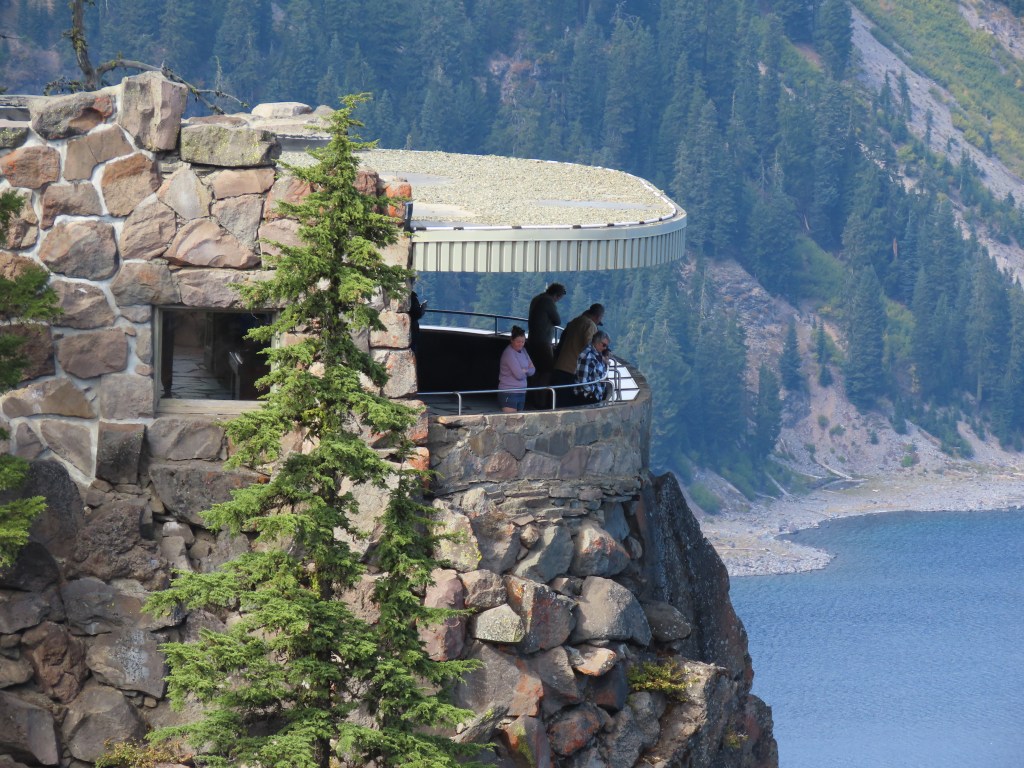
As we walked the path along the rim, we came to a branch that took us to the Sinnott Memorial overlook built into part of the caldera wall. The National Park Service tells us, “Sinnott Memorial was completed and opened to the public in the summer of 1931. Park officials wanted it to stay camouflaged from other viewpoints on the rim, thus the Sinnott’s exterior is a mosaic of native stone. Its rustic architecture set the tone for future buildings constructed at Crater Lake.” The overlook memorializes Congressman “Nick” Sinnott, who representated the Eastern Oregon Congressional District in the US House of Representatives, and served from 1919 to 1928 as Chairman of the Public Lands Committee. The views are stunning, you’re well-protected from the winds, and if you’re not careful, you may learn a thing or two about the unique geology of the lake.
I wish we’d had the foresight to book a stay at the Crater Lake Lodge, a beautiful and inviting hotel that was only a few days from closing for the winter season. I’m putting it on my list for another time. I was so torn: the fireplace in the lobby made me want to snuggle up on one of the surrounding chairs, but then there were the rocking chairs on the porch overlooking the lake. Decisions, decisions. We have to go back so I can spend time doing both!

 Later on, IRL
Leave a comment